Oct 4, 2026Applications
ENEPIG vs ENIG: PCB Surface Finishes Compared
ENIG and ENEPIG are the two electroplating-based PCB finishes. Compare structure, wire bonding, reliability and the plating lines behind them.
ENIG caps electroless nickel with immersion gold; ENEPIG adds a palladium layer between them — palladium is what makes wire bonding reliable. About a 7-minute read.
Whether you need it is a packaging decision: solder-only assembly suits ENIG; wire-bonded or high-reliability builds take ENEPIG.
Written by Ivy Deng · Engineering reviewed by Ben Yuan · Published 3 October 2026 · Updated 3 October 2026
How Each Finish Is Built
Both finishes start from bare copper pads and run the same first steps: cleaning, activation, then electroless nickel — a chemical nickel-phosphorus layer that acts as the diffusion barrier between copper and gold. From there they diverge:
- ENIG: the nickel is capped by immersion gold — a thin, pure gold layer deposited by displacement chemistry whose job is protecting the nickel from oxidation, not carrying current. Soldering dissolves the gold into the joint and wets the nickel.
- ENEPIG: before the immersion gold, an electroless palladium layer is deposited over the nickel. Palladium is the antidote to ENIG's known failure mode — "black pad", where aggressive gold immersion attacks grain boundaries in a badly controlled nickel layer and the joint fails along it. The palladium layer also gives gold and copper wire bonding a robust termination, which is why ENEPIG is the standard answer for wire-bondable finishes.
Structure summary: ENIG = copper / nickel / gold. ENEPIG = copper / nickel / palladium / gold.
Comparison Table
Aspect | ENIG | ENEPIG |
|---|---|---|
Layers | Cu / Ni(P) / Au | Cu / Ni(P) / Pd / Au |
Solderability | Excellent | Excellent |
Gold wire bonding | Limited | Strong suit |
Copper wire bonding | Variable | Strong suit |
Black-pad risk | Managed by tight bath control | Largely mitigated by the palladium layer |
Cost position | Lower — fewer layers | Higher — extra palladium step |
Typical fit | Standard SMT assembly | Wire-bonded packages, mixed bonding, high-reliability builds |
Choosing Between Them
Choose ENIG for standard SMT assembly where soldering is the only joining method and the supply chain can demonstrate tight electroless nickel process control. Choose ENEPIG when the build includes wire bonding (gold or copper wire), when the product's reliability class makes black-pad risk unacceptable, or when one finish must serve soldering and bonding together.
The governing documents are the IPC specifications for these finishes — thickness ranges and acceptance criteria for both ENIG and ENEPIG are defined there, and your customer drawings decide which applies.
The Plating Line Behind Both
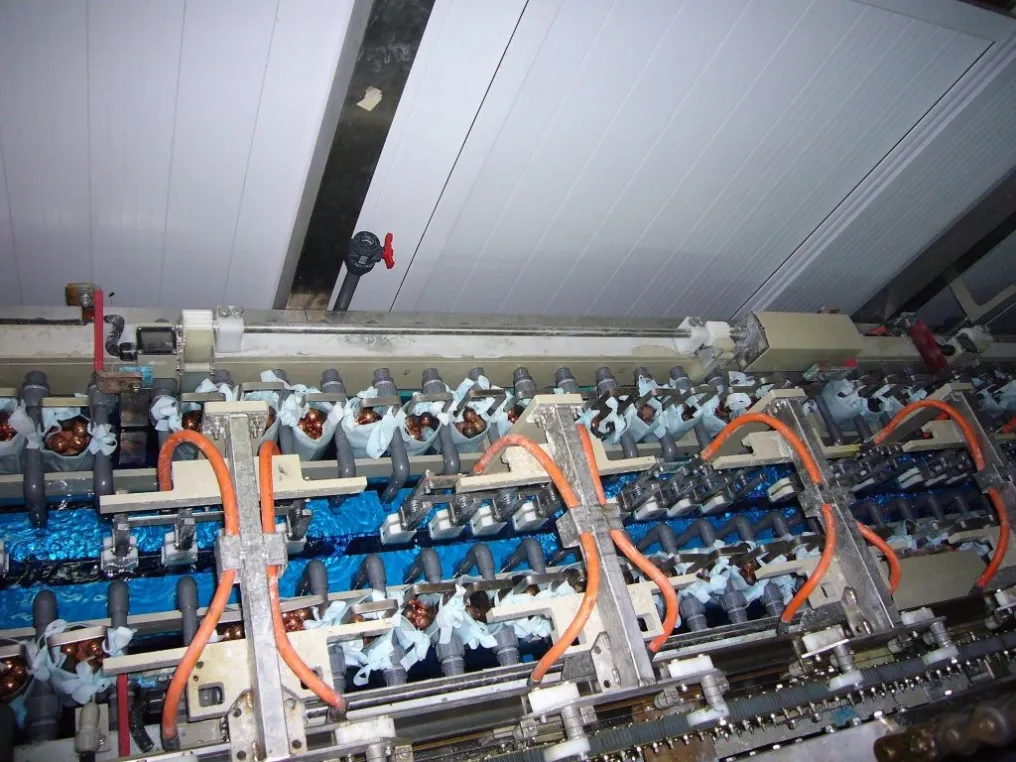
Both finishes are tank sequences bolted onto the copper stage of PCB manufacturing: electroless nickel, (palladium), immersion gold, with rinse stages between each chemistry. The equipment emphasis is chemistry control — heated tanks with tight temperature windows, continuous filtration, and bath analysis discipline — running as modules on reel-to-reel and VCP plating lines or as separate chemical lines. The copper plating stage ahead of them is where panel-level uniformity is won.
Standards and Evidence Boundary
- IPC-4552 — specification for ENIG; IPC-4553 — specification for immersion silver (for comparison); IPC-4556 — specification for ENEPIG. Thickness and acceptance criteria live here.
- Chemistry supplier datasheets — bath windows, contamination limits and analysis cadence are defined there.
- Your packaging plan — soldering-only vs wire-bonding decides the finish, before any line is sized.
Evidence boundary: this article compares the two finishes at industry-general level. Thickness ranges, acceptance criteria and reliability test requirements come from the IPC specifications and your customer drawings — not from this page.
FAQ
Is ENEPIG always better than ENIG?
No — it is different. ENEPIG adds robustness for bonding and black-pad mitigation at the cost of an extra chemistry step. For solder-only assembly with a well-controlled ENIG supply chain, ENIG remains the economical standard.
What exactly is "black pad"?
A joint failure mode where the solder or bond separates along a corroded nickel surface under the gold. It originates in out-of-control electroless nickel chemistry, and the palladium layer in ENEPIG largely prevents it.
Can one line run both ENIG and ENEPIG?
Yes — ENEPIG is ENIG plus a palladium module. Lines are commonly built so the palladium stage can be engaged or bypassed per product, at the cost of the palladium chemistry being maintained even when bypassed.
Related Reading
- Pillar guide: What Is Electroplating? — the plating landscape behind PCB finishes.
- Adjacent decision: Copper plating — the stage both finishes sit on.
- Next step: browse plating lines — reel-to-reel and VCP formats for PCB production.
Diagnostic CTA: What to Send Us — and What You Get Back
Send your board or package details through our RFQ form — panel or strip format, bonding plan (solder-only, gold wire, copper wire), throughput and quality class. ES-PRO returns: a recommended line concept for the chosen finish, the tank sequence with control scope, a quotation, and an explicit list of open questions — we state what is missing rather than assuming it.
References & Authorities
- IPC-4552 — Performance specification for electroless nickel/immersion gold (ENIG) plating for printed circuit boards — IPC.
- IPC-4553 — Performance specification for immersion silver plating for printed circuit boards — IPC.
- IPC-4556 — Performance specification for electroless nickel/electroless palladium/immersion gold (ENEPIG) plating for printed circuit boards — IPC.
- Chemistry supplier datasheets — bath windows, contamination limits and analysis cadence are defined by the chemistry supplier.
- Industry associations — e.g., NASF (National Association for Surface Finishing, US) and IMF (Institute of Materials Finishing, UK) publish supplementary guidance and training for the surface-finishing industry.
Standards are cited for identification; always use the current edition from the issuing body. Process parameters are governed by the datasheets for the specific chemistry.