
Oct 4, 2026Applications
Zinc Plating: Rust Protection, Process & Equipment
Zinc plating protects steel from rust at low cost. See how the process works, where it fits, and what a zinc plating line includes.
Zinc plating protects steel from rust with a sacrificial zinc layer — even at scratches, the steel stays protected. About a 7-minute read.
Low cost and active protection make zinc the most specified plating for fasteners, brackets and hardware — which is why zinc lines are everywhere.
Written by Mia Shang · Engineering reviewed by Li Wang · Published 3 October 2026 · Updated 3 October 2026
How Zinc Protects: Sacrificial Action
Steel rusts when iron reacts with oxygen and moisture. Zinc sits above iron in the galvanic series, so when a zinc-coated part is exposed, the zinc corrodes first and continues protecting the steel beneath it even at scratch lines — protection that paint and many other coatings cannot offer once damaged.
The corrosion performance of a zinc coating is set by two specification choices:
- Thickness class — coating specs (e.g., ASTM B633 for zinc on steel) define thickness grades by service condition; more severe environments call for thicker classes.
- Passivation (conversion layer). Modern zinc lines apply a trivalent chromium passivate over the zinc, multiplying corrosion resistance and setting the finish colour (clear/blue, yellow iridescent, black). Hexavalent passivates are legacy — today's specifications call for trivalent.
The Process, Briefly
Zinc plating runs the standard electroplating process: degreasing, acid pickling to remove rust and scale, activation, zinc deposition in an alkaline or acid bath, then rinse, passivate and dry. Bath systems are alkaline (cyanide and non-cyanide) or acid chloride — the choice affects throwing power, brightness and hydrogen embrittlement management for high-strength steels, and is made with the chemistry supplier against the part specification.
Hydrogen embrittlement is the one process risk worth knowing for high-strength steel parts: acid pickling and plating can introduce hydrogen, so specifications for high-strength hardware call for post-plate baking. The baking requirement comes from the drawing — bake ovens are a line-planning item, not an afterthought.
How a Zinc Line Is Built
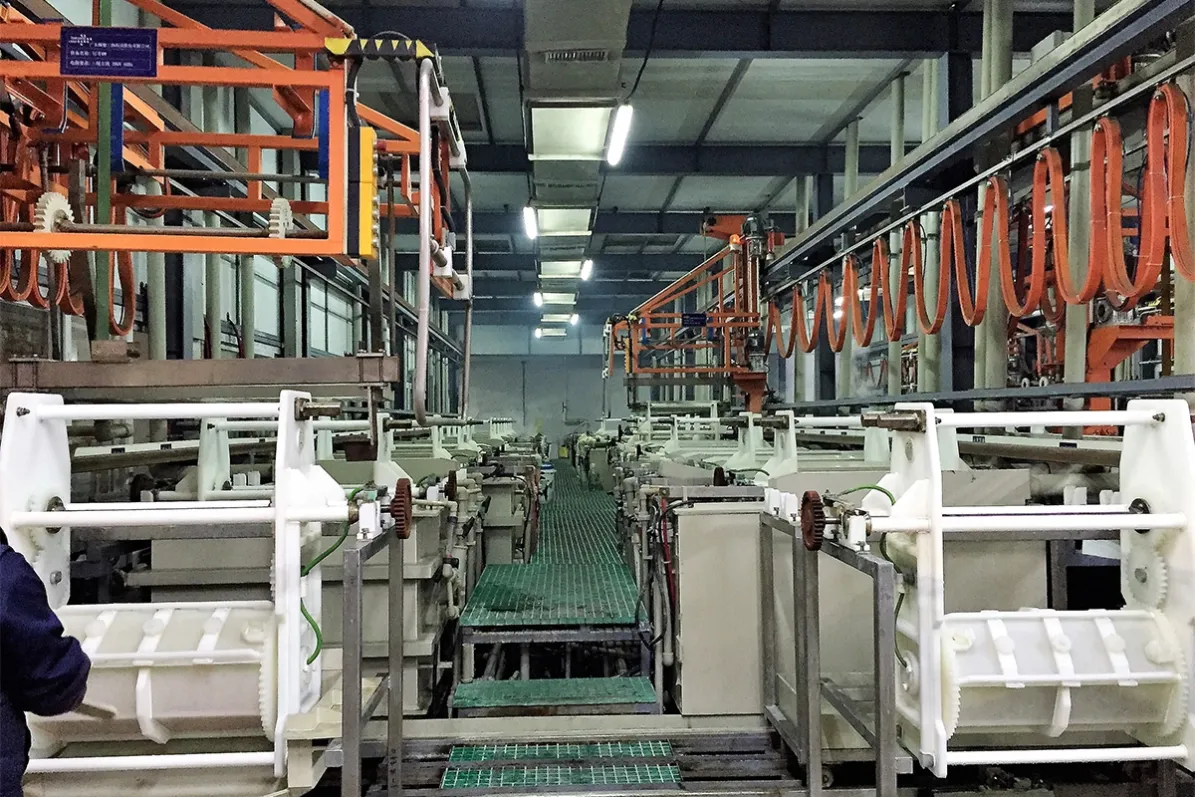
- Barrel zinc lines for fasteners and bulk hardware — the high-volume default, with automatic hoist transport between tanks.
- Rack zinc lines for larger parts, brackets and spec-critical work where thickness at defined locations matters.
Around the zinc and passivate tanks, the line includes the usual pre-treatment and activation stages, plating rectifiers sized per tank, filtration and agitation, counterflow rinsing, and wastewater treatment sized to the zinc-bearing rinse loads. Bake ovens join the line where high-strength parts demand embrittlement relief.
Standards and Evidence Boundary
- ASTM B633 — electrodeposited zinc coatings on iron and steel, with thickness classes by service condition; the model zinc specification.
- ISO 19598 — the ISO counterpart for zinc and zinc-alloy electroplated coatings with trivalent passivation.
- Chemistry supplier datasheets — bath system, additive control and passivate windows are defined there.
Evidence boundary: this article covers zinc plating at industry-general level. Thickness classes, salt-spray requirements and embrittlement relief come from your drawings and the applicable standards — not from this page.
FAQ
Will zinc-plated steel rust?
Eventually, yes — zinc is sacrificial and is consumed over time. The specification question is how long it must last: thickness class and passivation type are chosen against the service environment, and a correctly specified zinc coating protects through its intended service life.
What is the difference between clear, yellow and black zinc?
The passivate chemistry and thickness, not the zinc itself. Trivalent passivates come in clear (blue), yellow iridescent and black variants, each with different corrosion performance and appearance — the drawing specifies which.
Is zinc plating suitable for high-strength steel bolts?
Yes, with embrittlement management: specifications for high-strength hardware require post-plate baking to drive off hydrogen picked up during pickling and plating. Confirm the baking requirement from the part spec before planning the line.
Related Reading
- Adjacent decision: Barrel and rack plating — which format your zinc parts should run.
- Pillar guide: The Electroplating Process, Step by Step — the sequence a zinc line runs.
- Next step: browse plating lines — barrel and rack zinc line formats.
Diagnostic CTA: What to Send Us — and What You Get Back
Send your zinc-plated part families through our RFQ form — part types, sizes, strength grade, corrosion spec and throughput. ES-PRO returns: a recommended barrel/rack line configuration with tank sequence, rectification and bake-oven scope where required, a quotation, and an explicit list of open questions — we state what is missing rather than assuming it.
References & Authorities
- ASTM B633 — Electrodeposited coatings of zinc on iron and steel — ASTM International.
- ISO 19598 — Electroplated coatings of zinc and zinc alloys on iron or steel — International Organization for Standardization (ISO).
- Chemistry supplier datasheets — bath system, additive control and passivate windows are defined by the chemistry supplier.
- Industry associations — e.g., NASF (National Association for Surface Finishing, US) and IMF (Institute of Materials Finishing, UK) publish supplementary guidance and training for the surface-finishing industry.
Standards are cited for identification; always use the current edition from the issuing body. Process parameters are governed by the datasheets for the specific chemistry.